Friday, October 16, 2009

Peas and Carrots yin yang soup


Carrots are ubiquitous in my cooking usually as one of the trilogy of mire pois aromatics that create the canvas of flavors in stocks, soups, salads, braises, and on and on. I am a big fan of soups especially vegetable or fruit soups. This dish is a combination of two delicious soups that complement one another in flavor, texture and color. When served together in a single bowl the presentation is spectacular.
Be careful to prepare the soups with the same hearty textures so that they flow together to form the yin yang design without being too runny.

Prepare carrot soup and pea soup separately

1/2 cup crème fraiche

To Serve:
Simultaneously pour both soups from opposite sides of serving glass and offset to form a Yin-Yang design. Slide the bowl back and forth to bring the soups to the same level.

Place a dollop of crème fraiche in individual sauce boat and serve alongside or drizzle on top.


Carrot Soup

1 tablespoon olive oil
2 pounds carrots, peeled, sliced
1 large onion, finely chopped
3 garlic cloves, brunoise
2 whole cloves
4 cups (about) chicken stock (vegetable stock may also be used)
1 1/2 teaspoons fresh lemon juice
dash of nutmeg

Heat oil in heavy large saucepan over medium heat. Add carrots, onion, garlic, and cloves and sauté until onion is translucent, about 8 minutes. Add 3 cups broth. Cover and simmer until carrots are very soft, stirring occasionally, about 30 minutes.

Remove cloves from broth and discard. Puree soup in batches in blender. Return soup to same saucepan. Mix in lemon juice and nutmeg. Season to taste with salt and pepper. Thin to desired consistency with more broth. (Can be prepared 1 day ahead. Cover and refrigerate.)

May be served cold or reheated.

Green Pea Soup with Tarragon

2 lb fresh shucked peas (weight after shucking)
1 tablespoons extra-virgin olive oil
1 cup sliced shallots
4 cups (or more) chicken stock or vegetable stock
2 teaspoons chopped fresh tarragon, divided

Heat oil in heavy large saucepan over medium-high heat. Add shallots and sauté until golden and almost tender, about 7 minutes. Add peas, 3 cups broth, and 1 teaspoon tarragon; bring to boil. Reduce heat to medium and boil until flavors blend and peas are tender, about 7 minutes. Cool slightly. Working in batches, puree remaining soup in blender until completely smooth. Return soup to same saucepan. Bring to simmer and thin with more broth by 1/4 cupfuls, if desired. Stir in remaining tarragon. Season with pepper.

Monday, October 12, 2009

Scratch pumpkin pie

The Ferry Plaza was packed on Saturday when Stacy and went to do our weekly shopping and to meet our friend Crosby for lunch. Crosby had invited us to watch the air show from the roof of his building on Telegraph hill so we invited him to join us for lunch to make a full day together. I enjoy how the changing of the seasons affects our diet as we try to eat seasonally from the farmer’s market as much as possible. As we are moving into the cooler and wetter months, we are craving comfort foods and our taste for white wine wanes as our enjoyment of full bodied red wines increases.

This week I am experimenting with making pumpkin pie and pumpkin bread starting from fresh sugar pie pumpkins instead of opening a can. Several vendors at the market offer the small orange gourds for sale. I bought one last week that I cleaned, quartered and roasted. This week I bought another pumpkin to try poaching to see if it works better. The roasting method caused a tough skin to form on the inside of the pumpkin. I am sure poaching the pumpkin will prevent that from happening, although I am concerned about having too much moisture content in finished product.

Why go to all that trouble when canned pumpkin is so widely available and so inexpensive? For me there are three reasons:

1) Taste: Starting from fresh produce always produces a fresher tasting final dish. It also lets me control all of the seasonings that get added to the produce.

2) Source: When I start from fresh produce that I buy directly from the grower I know where the plant that bore the fruit grew and how it was tended by the farmer. I get to know the farmers that I buy from so that I know that we are eating produce that is grown using protocols that do not include chemicals or manipulation of the produce (like hot housing).

3) Satisfaction: Making a dish all the way from fresh produce to finished product is a satisfying and fulfilling journey. The simpler the better for me too.

Here’s the recipe for pumpkin pie:

2 cups pumpkin puree:
To make the puree, get a sugar pie pumpkin and cut off the top. Cut the pumpkin in half from stem to bloom. Scrape out the seeds and the stringy innards. Clean and toast the seeds for a nice snack. I like mine with sea salt and a bit of pepper.

Pre-heat oven to 400 degrees. Place the pumpkin halves skin side up in a baking dish with 2 inches of water (This is the poaching method). Bake for about 45 minutes until the pumpkin flesh is soft. If the water gets nearly all evaporated, add boiling water to keep the poaching process going. Cool, remove the skin and puree the flesh of the pumpkin.

¼ teaspoon salt
¾ cup granulated sugar
1 teaspoon ground cinnamon
½ teaspoon ground ginger
¼ teaspoon nutmeg
¼ teaspoon ground cloves
2 eggs
12 oz unsweetened evaporated milk

Mix the ingredients together well.

Preheat oven to 425 degrees

Pour mix into a 9 inch baked pie shell (blind bake a nice flour and butter crust). Protect the exposed crust edges with aluminum foil so they don’t burn.

Bake the pie for 15 minutes then reduce the oven temperature to 375 degrees and bake for another 30 to 45 minutes until a knife inserted in the center of the pie comes out clean. You may remove the crust protection in the last 10 minutes of baking to crisp up the crust edges.

I like my pumpkin pie with a dollop of whipped cream (not the stuff from a can!). I sometimes whip my cream flavored with a bit of almond liqueur.

This pie is always a hit at Thanksgiving. We will make the pie at the November 7th meetup. There are still four spots available.

Wednesday, September 16, 2009

Cooking on Howell Mountain


In June of every year there is an auction event held somewhere in Napa to benefit the Howell Mountain Elementary School, a charming school that serves the community in and around Angwin atop Howell Mountain. Our good friends Jacalyn and Allen Spence have a vineyard and winery they have been building nearby for over a decade now. It is one of our favorite places to visit with the only kitchen I like to cook in other than my own. Jacalyn volunteers for the auction in some major leadership role every year. We make sure to attend the auction to support Jacalyn and Allen and to share their company afterward overnight at their home. It is absolutely bucolic.

Well, usually it is. This weekend Stacy and I along with a few of our friends cooked, served, and cleaned up after a five course meal for 60 folks that was auctioned in June for $100 a seat. Saturday was a very long and busy day that started at 3 AM when our frightened dog awakened us to let us know there was a thunderstorm directly over our house as all 95 pounds of quivering mutt-head tried desperately to get under Stacy’s pillow to become invisible. Sleep deprived and groggy, we rose early to start the day. After walking our dogs, starting 8 pounds of beans to soak, and loading my truck and borrowed trailer full of food and service equipment, we headed north just after 9 AM to pick up our friends Buda and Deb at their home on Portero Hill. The four of us made a hectic twenty minute stop at the Ferry Plaza Farmer’s Market to pick up three flats of stone fruit, 20 sweet baguettes, and a few other items to complete the shopping for the feast. After driving another hour and a half, we were atop Howell Mountain by noon to drop off the trailer at Summit Lake Winery so the team there would set up the dining table and the plating station. At about 1 PM we started cooking at the Spence Winery at the other end of Summit Lake Drive.

All afternoon six of us chopped, sliced, emulsified, and tasted enough salad, heirloom tomatoes, vinaigrettes, cucumbers, and humus to finish the prep. We sizzled a full 750ml of garlic oil that made the whole house smell like a Texas toast factory. All went smoothly in the Spence kitchen with only a few hiccups like ransacking my coolers for the Dijon mustard and not finding it until after we had scrounged some from Jacalyn’s fridge. This made getting the taste profile of the vinaigrettes a challenge as the mustard we scrounged had a much higher salt content than what I written the recipe for, which is why the recipe says “salt to taste”. After removing some of the mix and adding more vinegar, the base balanced and we added the oil to emulsify a delicious balsamic vinaigrette for the bruschetta.

By 4 PM we had reloaded my truck and headed for Summit Lake Winery. As we pulled into the long gravel drive between the blocks of vines towards the house, we saw what the team had accomplished while we were cooking. The table was beautifully set with white table cloths and chair covers, gold chargers, gold flatware, and alternating red, gold, and black napkins and chair bows. The look of it took my breath away, and the length of it reminded me that we had a lot of work ahead of us.

The house at Summit Lake is essentially a cabin with drop-dead gorgeous views of the Valley, but a small 1940’s kitchen. We set up our stations on tables and a hutch to finish our dishes. The final prep involved blending the avocados and lime juice into two gallons of avocado corn soup and staging the containers of it in a large cooler while the beans simmered in my 16 quart pot on a portable stove on the patio adjacent to the kitchen. We also had to make the cilantro oil which turned out to be the biggest challenge of the afternoon. In the confusion of moving from one location to another to prepare the meal, the Italian parsley brought to garnish the entrée was chopped with the cilantro and blended with extra virgin olive oil for the cilantro oil. This mistake caused the blender to be overloaded and the straining process was completely clogged as the parsley absorbed the oil. After struggling with the green glob for 45 minutes, Buda was able to extract enough of the herb oil for the soup course. We would find out later though that we would have a crisis looking for a garnish to add color to the entrée dish.

At 5 PM our first guest arrived a full hour early. Heather welcomed him, gave him a glass of wine and took him away from the kitchen to the lawn to enjoy the view and the beverage. By 5:45 several guests had gathered in the orchard in front of the winery building, so we decided to send out appetizers 15 minutes ahead of the “official” start time of the party. Humus was piped onto cucumber rounds along with a dollop of Greek yogurt and toasted sesame seeds as the first appetizer. Mark, proprietor of Summit Lake, sliced gorgeous figs in half and then opened each one into a v-shape. He then nestled a small piece of chevre into the slit followed by a drizzle of peppered honey over the cheese as the second appetizer. Meanwhile Stacy and Jacalyn sliced four gallons of rounds from the fresh baguettes. They then went to Allen who brushed one side of each round with the garlic oil and toasted them in my toaster oven as the base for the third appetizer: heirloom tomato brushetta. Buda and I topped the toasted rounds with the tomatoes we had chopped earlier in the day which had been marinating in a balsamic vinaigrette for a few hours. With a bit of basil chiffonade to garnish the dish, we sent them out to the hungry guests. More and more guests arrived over the next half hour as my team continued to crank out appetizers to feed them. We were operating like a well oiled machine.

At 6:30 PM I went out to the appetizer station to let Heather (the other half of the Summit Lake team), know that the kitchen was standing by ready to start meal service at the table. Around 6:45, we transported the soup course to the plating station near the dining table about 150 yards from the kitchen. We executed the plating process by spreading bowls onto a table followed by two of us ladling soup into each bowl; two more drizzling crème fraiche onto the pale green soup; followed by another adding avocado balls; finished by another team member drizzling cilantro oil to finish each bowl. Once plated, the bowls were loaded onto trays for service and sent to the table. This was repeated over and over again until the entire table was served. Serving four courses on that long table was looking like hard work!

After all of the soups were on the table, we met the biggest challenge of the day: The team had to be split in two. I would travel back to the Spence’s kitchen with Jacalyn as my helper to finish the entrée and make the cabernet sauce while Buda led the rest of the team to bus soup bowls and send out the stone fruit salad. Jacalyn and I left on a dead run to my truck to make the trip to her house as Buda took command of the service team. As the old beast roared to life, the clock on the dash read 7:08 PM. This created yet another concern as the sun would set at 7:20, leaving us in the dark to finish service. Four minutes later we were at the Spence’s. We quickly removed the one-time-use aluminum braising pans from the oven one by one, each one containing over 16 pounds of short ribs. Each pan made a trip to the sink where I let it protrude a bit over the sink from the counter with a container ready in the sink to catch the braising liquid. I then punctured the end of the braising pan with my knife to let the liquid run out of the pan. The drained pan, with the ribs still inside and covered, were then placed into an identical braiser to keep any remaining juice in the pan. This technique enabled us to drain the braising liquid from 48 pounds of ribs without uncovering the pans. The liquid was then strained into a large pan on the stove to make the cabernet gravy. We repeated this procedure three times with one mishap when one pan leaked a trail to the sink. With her dog lapping ahead of us, Jacalyn and I made a quick cleaning of the floor as the sauce heated on the stovetop. The liquid was thickened into a beautiful red gravy using a roux I had made from the tallow I skimmed from the initial braise of the meat. This saved time and made a rich, flavorful gravy.

Once we had the gravy into containers we loaded them into my truck with the braising pans and covered both with a blanket to keep them hot. It was 7:20 PM as we headed back to Summit Lake with twilight falling. Other than a moonless darkness quickly falling around us the timing worked well as the last of the salad plates were being bused as we starting plating short ribs with cabernet sauce and cannellini runner beans with Italian parsley. Where is the parsley? Buda and I dashed back to the kitchen to find the missing herb that would garnish the pale white beans. It was then that I realized we had blended all of the parsley along with the cilantro earlier during the last prep. Oops. Undaunted, we quickly made a chiffonade of the basil left-over from the bruschetta, and flew back to the plating station. By this time it was full darkness with very little lighting provided by some decorative lights strung in a nearby tree. I had to remove the ribs by feel from the scalding braise. Somehow we managed to plate for all of our guests followed by plates for our hungry staff that had been hard at work since early morning with very little to eat other than samples of what we prepared for our guests. We were famished and satisfied that we had fed so many people an elegant and scrumptious meal.

We all grabbed a plate and settled into some empty seats along the table that were left unused by eight no-shows. They really missed out on some good ribs. The sauce had started as 12 pounds of beef knuckles a week earlier. I had roasted the bones with the little bit of meat they had on them which all went into a stock that was slow simmered for over 12 hours. The finished stock contained so much gelatin that it set up like Jell-O. This was added to the braise along with heirloom tomatoes that had been canned in our August 2nd meetup , and a beautiful Napa Cabernet Sauvignon that the Spence’s had made. The ribs were braised last Thursday for two and a half hours at 320 degrees. Once cooked, the braising liquid was de-fatted and added to the one-use aluminum braising pans along with 20 ribs in each pan. The tallow was slow cooked with all-purpose flour the same day to make a blond roux which was then stored in my refrigerator. The pans were then sealed and refrigerated until Saturday at 2:30 PM when we put them into 250 degree ovens to reheat for dinner. The long cooking process married the flavors of the allspice and wine and tomatoes to succulent perfection. The velvety gravy executed a perfect pairing between the dish and the Howell Mountain Cabernet that was served with dinner. The beans added that contrast that created a magical combination of flavors and textures and with the basil chiffonade, color too.

Once done with the entrée, it was back to work to clear the dinner plates and serve our dessert. Heather had made four Mexican chocolate tortes that were like cinnamon chocolate ganoush. These were plated alongside a scoop of vanilla ice cream. Both received a generous spoonful of raspberry sauce that I had made a few weeks before, froze, and thawed that day. Although plating in the dark meant some drips on the plates, it was decadently delicious.

Now all that was left was to clean up. At 9:30 PM we wearily made our way back to the Spence’s for some beautiful 2006 Cabernet from their winery. We sat up until about 11 PM chatting about the dinner party, laughing at our mistakes, loving the wine, and just having fun together. The last things I remember from the night were my head hitting the pillow, blinking once and seeing morning.

Time to get up and enjoy the Wine Country!

Sunday, September 6, 2009

Grilled corn and mushrooms

Last week I promised to recreate the corn and mushroom dish we fell in love with at Slanted Door. It is actually quite simple to do, as many dishes are that let the fresh ingredients express themselves. Here’s the recipe:

Slanted Door Grilled Sweet Corn
Serves 4 as a side dish

Grill 2 ears of fresh sweet corn. Cool and strip the kernels from the cobs.
Chop a dozen small chanterelle or shitake mushrooms into medium dice (each dice about four times the size of a kernel of corn)
Heat 1 tablespoon peanut oil to smoking in a wok.
Keep the heat below the wok on high and work quickly.
Add mushrooms and sweat until they release their moisture
Add corn kernels and 1 teaspoon fish sauce.
Once corn is heated, serve and enjoy.

Last week, Stacy and I had one of those rare Friday vacation days to enjoy together, just the two of us. After luxuriously sleeping in until 7:30 AM, we rose, fed our dogs and walked them a couple of miles to get our blood flowing again. One back home and showered, we enjoyed a light breakfast of Bellwether Farms sheep’s milk yogurt with fresh berries followed by a hot shower. What a wonderful way to get our goof-off day started.

Well, not quite a goof-off day. We did have a mission to accomplish as part of our preparation for the Sept 12 benefit dinner party on Howell Mountain: I needed to measure the oven at Spence Vineyards to make sure 48 pounds of braised short ribs would fit in it, which is the one hot dish we plan to serve next Saturday. A trip to Howell Mountain gave us the opportunity to make a day trip to the Wine Country, which is one of our favorite things to do to relax and enjoy each other’s company. I also had several phone calls to make to stay on top of my consulting business, which I planned to do from the car during the hour and a half drive from our home in Burlingame to Angwin on top of Howell Mountain.

Then there was the Bay Bridge closure to contend with. We chose to route across the San Mateo Bridge to get to 880 and travel North to Vallejo on 80 and over on 37 to 29 for the drive up the Napa Valley. Traffic was stop and go on the East side of the San Mateo Bridge as we crawled towards 880. It took a half hour longer than expected to get to Napa which meant I had to lead my conference call from the passenger seat of the truck as Stacy sped North. As we neared Saint Helena, the traffic slowed to a craw again prompting Stacy to leave the line of cars to taste some wine at Hall Winery. I was able to wrap up my call as she eased the truck into a shaded parking space much to Stacy’s delight.

Scott, our pourer at Hall was very friendly and eager to share all of the sustainably farmed wines including some delicious single vineyard bottling of three different varietals. We really like the two sauvignon blancs that comprise all of the white wine program for Hall. Their T-Bar-T at $22 was a rich and complex blend of SB and vigonier and a touch of new French oak that we highly recommend. We also loved the Diamond Mountain Cab which is only available at the winery. It was luscious with a good balance of dark berry fruit and oak and a long finish. Yum. It is $100 per bottle though, which makes it a special occasion wine and more than we wanted to pay. It was nice to have a taste, though.

After our tasting, we back tracked a few hundred yards to buy three of specialty sandwiches from the deli in the back of Dean and Deluca. Stacy also bought a bag of chips and a German chocolate cupcake to share. Then we got back into traffic to make the final slog into Saint Helena to pick up a case of olive oil from Olivier Napa Valley. They recycle bottles and the customer fills their own bottle from the large copper vats of oils that include small tasting cups and crunchy bread for tasting the oils. It is nice to taste and compare the different oils to find what you like the most before buying. We bought six Mission and six Arbequina that I will use for cooking, making vinaigrette, mayo and aioli.

After loading the case of oil into our truck we headed up Howell Mountain to Spence Vineyards where we enjoyed a leisurely lunch with Allen Spence on his porch overlooking his vineyards and expansive herb garden. It was such a beautiful day to munch delectable sandwiches in an Eden-like setting even with the swarm of hornets that wanted part of our lunch, or a nibble of our skin for their lunch. I felt reconnected to nature in a very real way, and content too.

The oven checked out so I believe there will be enough room for braising all 48 pounds of short ribs next Saturday if I combine the space of their Viking oven in the kitchen with the gas grill on their porch. It will be challenging to control the heat of the grill and to pack the braisers so that the meat fits and still develops the flavor profile I’m looking for to delight 60 diners at dinner next week, but I think we can manage.. Wish me luck, please!

After lunch, Stacy and I were back on the road, although this time we were on back roads between Calistoga and Occidental. The drive over the mountains was glorious as we sought to accomplish our second mission: picking up two cases of Baletto Pinot Gris that will be served with the dinner next Saturday. It’s a crisp refreshing wine that sells for $9.80 a bottle if you buy a case. When a wine is both affordable and good we like to buy quantity to share. A quick stop at Baletto and then we went around the corner to Lynmar to relax in their garden overlooking the Quail Hill Vineyard while enjoying their reserve tasting of two chardonnays and two pinots. They served the 2006 La Sereinité and 2007 Old Wente selection chardonnays. The La Sereinité was superb and priced accordingly. The Wente was okay and while priced much less than the LS, it wasn’t something we would buy as it seemed to heavily oaked. The pinots were the 2006 Russian River and 2007 Terra de Promissio Vineyard. Both were quite good and priced fairly (if you get the member discount that is). Stacy and I lingered at Lynmar to enjoy the smells of their organic vegetable and herb garden and to stroll the grounds to enjoy the late afternoon mild weather. It was blissful.

We headed south on 101 from Santa Rosa just before 4 PM. As we got to Petaluma a half hour later we saw miles of cars stacked up to get onto roads that connected North Bound 101 to points east. I mean miles and miles of cars that didn’t seem to be moving at all. Then just north of Sausalito, Southbound 101 came to a grinding halt. It took us ½ hour to go 2 miles to the Spencer Avenue exit to make our way down the cliffs into the downtown district of Sausalito. We decided to take refuge in our favorite sushi restaurant for an hour or so to let rush-hour traffic dissipate.

Sushi Ran is one block of the main drag just across from the marina in Sausalito. It is housed in the ground floors of two buildings separated by a breezeway in a small office complex. One building is the sushi bar and restaurant which is always crowded with narrow passages between tables making it difficult for the patrons and wait staff no navigate without occasionally jostling a seated diner. We prefer the bar across the breezeway with expansive spaces to relax both at the bar and at cocktail tables inside and on the patio. They serve a full dinner menu to patrons there along with wines, a vast selection of sakes, and beer and well drinks. We sat and enjoyed fresh hamachi nigiri, roasted kumamoto oysters, spicy tuna rolls, and scallop dumplings along with a chilled, floral sake called Akitabare that was poured to overflowing into a clear glass set inside a lacquered wooden box. Everything was great although the spicy tuna rolls were something we would not order again.

The bar at Sushi Ran is a typical sushi bar atmosphere where patrons will strike up friendly conversations with strangers seated next to them. We met a fellow foodie couple also taking refuge at the bar before the showing of Julia & Julie at the nearby theater. They live in Tiburon and make their own wines at their weekend place in Sonoma. They are very fortunate to get access to fruit that is contracted for Napa Silver Oak Cabernet. Apparently during harvest some clusters fall off the tractor onto his crush pad where he just lets the fruit speak for itself. We hope to be invited to dinner there soon!

Happy Labor Day Weekend!

Sunday, August 30, 2009

Gourmet Corn on the Cob?

How many of us remember going to a picnic where there was a pot of boiled corn on the cob? I always remember thinking what a perfect food – it tastes great, looks great, and comes on its own serving utensil. I always liked mine rolled in butter with a bit of salt. Give me a burger with ketchup and onions then I’m in heaven.

As an adult I still love corn on the cob, especially if it is picked no more than the the day before I eat it. This is a great year for sweet corn. There is a stall at the Ferry Building Farmer’s Market that has pretty good white corn. The best I have had, ever, is the heirloom yellow and white that a farmer offers at the Burlingame Farmer’s Market on Sunday. The corn is grown in Gilroy where the hot weather is perfect for growing grain like corn. The farmer has consistently had white corn that is super sweet and crisp. Occasionally they have the heirloom variety which is also crisp and sweet with a more complex almost nutty flavor that comes through when I grill it.

There are a few basic ways I cook fresh corn depending on if I want to fire up my grill or not. Friday and Saturday were sweltering hot in Burlingame, so I took the kitchen outside to my simple Weber kettle grill. About 30 minutes before grilling the corn, I start the coals in my chimney to get the grill going, and I put the ears in my sink in cold water to soak. Be sure to leave the husks on for outdoor grilling. When ready, I pour the glowing coals onto one side of the grill so that I have two distinct cooking areas: One over direct heat which has the coals below, and the other side for indirect heat that does not have any coals below. I always set up my grill this way no matter what I plan to cook. For meats, I sear over the coals with the lid off to get perfect grill marks, and finish indirect with the lid on to get the perfect temperature and a good infusion of smoke. Before the meat or vegetables go on, I place the corn at the edge of the direct heat area to get the steam going inside the husks. I rotate the corn a quarter turn every three or four minutes as the husks get a toasted look to them. Once the whole corn is tan, I remove from the grill and wrap in foil while I cook the meat, which takes five to seven minutes depending on what I am grilling (usually boneless chicken breasts, hamburgers, or steaks). While the meat is resting I shuck the corn. If all I want is some butter and salt, I shuck an ear, roll in butter, have Stacy sprinkle a bit of salt while I rotate the ear, and put it back into the foil to keep it hot. I repeat this process one ear at a time. If I want some grill marks on the corn, I take the shucked ears to my grill for a quick sear over direct heat and then move them to the indirect side to keep hot. I then repeat the butter and salt process and rewrap the ears to keep them hot until opened at the table. Delicious!

This weekend Stacy and I enjoyed one of those rare weekends that our plans were simply “do nothing”. We savor the opportunity to be completely spontaneous for two days particularly over a hot and lazy late summer weekend. We made our usual trip to the Market with our only task to buy a few items for our meals over the coming week. After picking up eggs, plums, peaches, strawberries, runner beans, red onions, a few varieties of heirloom tomatoes, English peas, Brussels sprouts (the first of the season), and some carrots, we decided to have lunch seated at the bar at Slanted Door. If you arrive a few minutes before eleven you are guaranteed a seat at the bar, and lately even a table if you want. We like to sit at the bar to chat with the bartender as we enjoy a sort of Asian tapas meal. Stacy loves the Reposado (rested and aged in wood) margarita up with no salt which is served in a chilled martini glass. I always ask the bartender for a white wine recommendation since their wine list is incomprehensible to me as I rarely drink the floral sweet wines from Eastern Europe that they feature. I usually get a dry Riesling reminiscent of Chablis that pairs well with the flavors Chef Phan imparts into his dishes.

The food is always fresh and a mix of seasonal and regional ingredients that Phan uses to achieve his fusion of East and West. The menu includes a vegetables section at the bottom that features something sourced from a local farm as an ingredient in a vegetable side dish. We frequently order a vegetable dish accompanied by broken white rice as our entrée, as we did this Saturday. The dish was white corn from Catalan Family Farm that was grilled and stripped from the ears. The chef then fired some chanterelles in a hot oiled wok with some scallions, fish sauce, a hint of chili, and the corn kernels.

I plan to duplicate the recipe tonight using my Lodge cast iron wok and the heirloom corn I bought today at the Burlingame Market. I’ll let you know how it turns out.
Perfect Corn On The Cob on Foodista

Wednesday, August 26, 2009

Chicken Salad


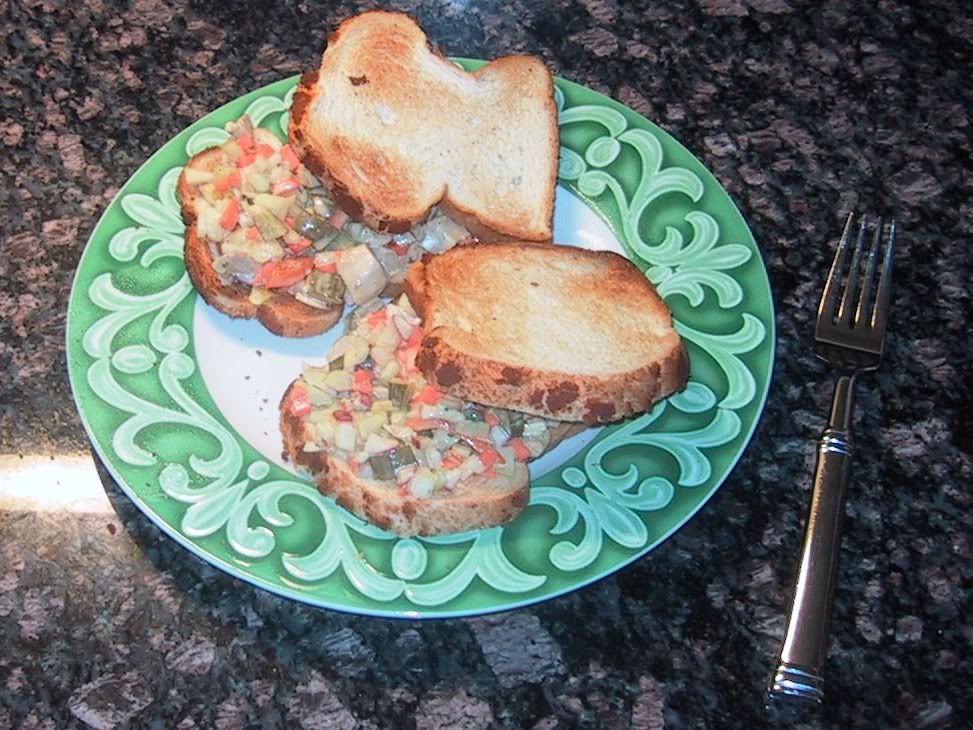
Chicken salad sandwiches were something I grew up eating. Recently I reconnected with this simple dish and found I really like it when it is made from scratch with fresh ingredients. It is also a healthy and inexpensive meal. I buy whole chickens and then de-bone them myself because I know where the meat comes from and how fresh it is. Also, I buy a whole natural chicken for what it costs to buy just the breasts from the meat counter.

On September 19th I plan to lead a class at my house to teach the knife skills necessary to accomplish this simple task and create a few dishes from a single, whole chicken. From one chicken Stacy and I get a nice meal of roasted or grilled "airline" breasts. I also make stock from the carcass which I use for soups or to make risotto or steam rice or let soak into pasta. I use stock as a base for pan gravy sometimes when I want a bit more comfort in our meal when we eat the breasts. The other parts: the legs, thighs and wings are used for quick meals.

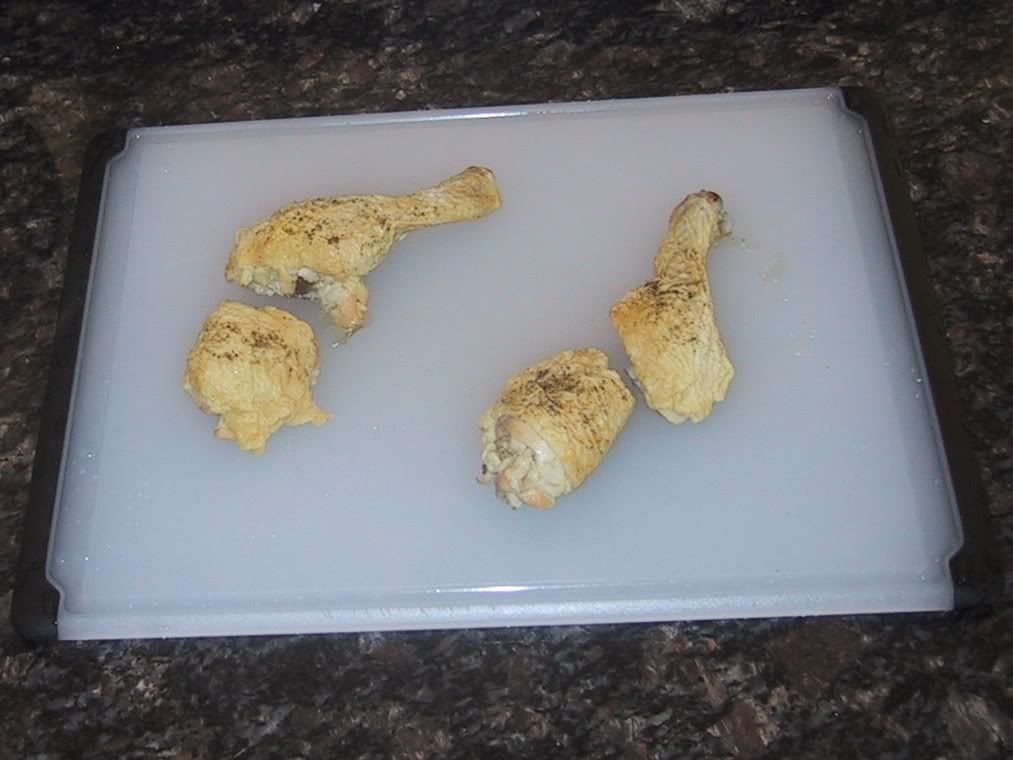
When I de-bone the chicken, I de-bone the thighs and leave the bones in the legs and wings as I don't find the resulting boneless cuts worth the effort. I roll the boneless thighs and set next to the legs and wings and roast them with the carcass as part of the de-boning process. The roasted carcasses and pan drippings go into the freezer in a bag until I have enough bones to make it worthwhile to spend a few hours making stock. The legs and thighs go into the refrigerator and the breasts to a brine for dinner that same day. It takes me about 5 to 10 minutes to complete the deboning and another 15 minutes to roast and de-glaze the roasting pan.

Later in the week I slice the boneless thighs and strip the meat from the legs to use in salads. The wings are used for spicy wings or just eaten cold for lunch one day. My favorite salad is my aioli based chicken salad. I love it on toasted bread for lunch. Sometimes Stacy and I will eat it for dinner. I usually produce four portions from the legs and thighs of one chicken, so it is a very inexpensive food. It is labor intensive to make a fresh salad if you cut the vegetables to get the best texture and flavor from the salad..

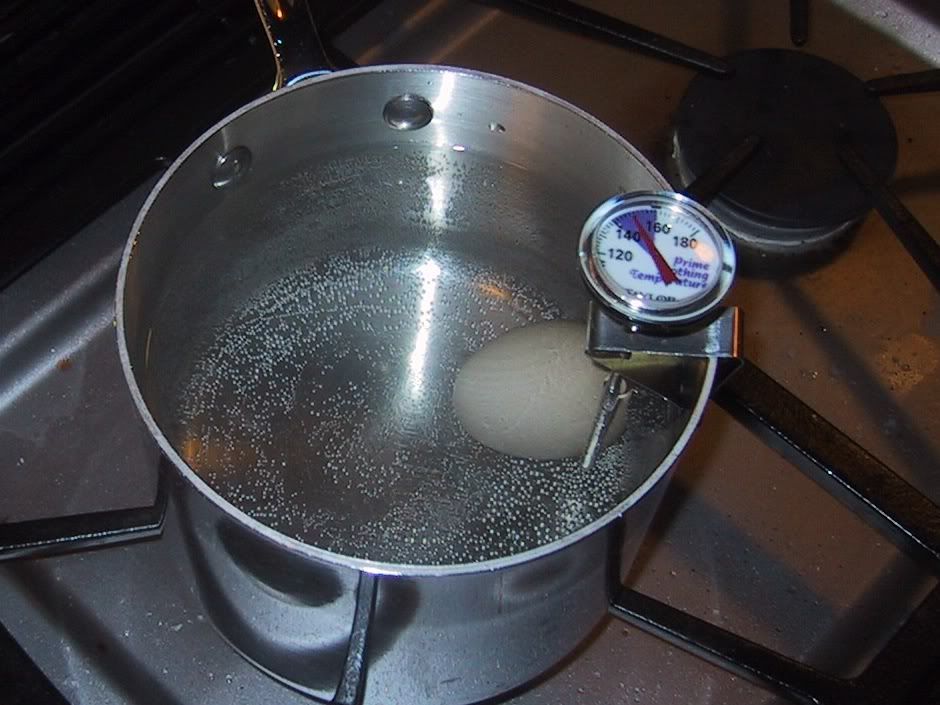
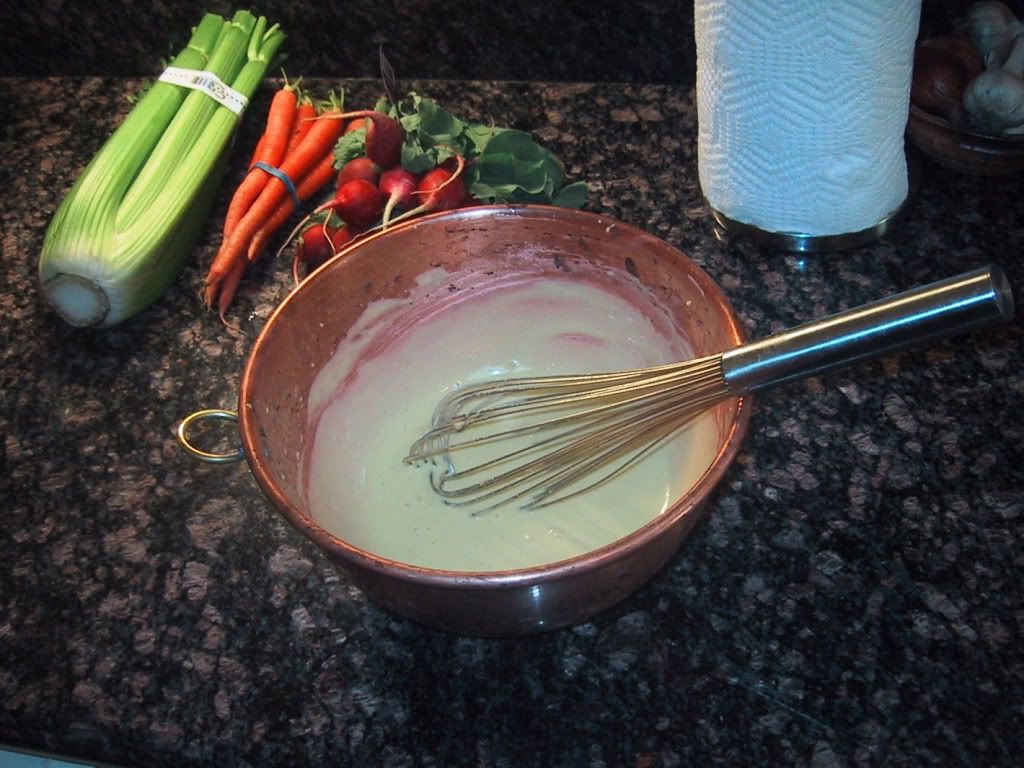
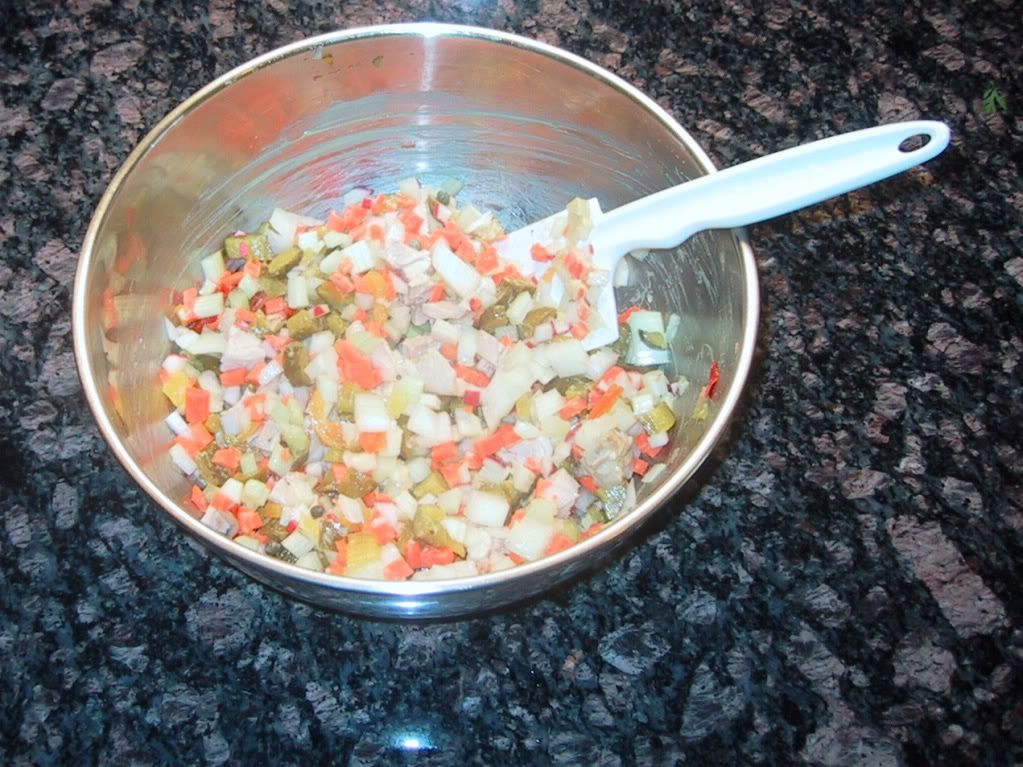
I start by making my own aioli which is described in an earlier post. This is not hard with a power mixer and tastes so much better than store-bought mayo. For my salad I use one egg yolk and 1/2 cup of oil in the aioli. Then I cut fresh carrots into a brunoise; fresh onion and celery into a small dice; And then I add pickles. I love pickles. I make my own dill using all sorts of vegetables like zucchini squash, radishes and even turnips. I make bread and butter pickles with onions and cucumbers and sweet red or yellow peppers. For my salad, I drain the pickles and then chop them into dice the same sizes as my fresh vegetables. Next, I add a bit of mustard and paprika. Sometimes I throw in some drained capers if I have them in the fridge. I mix the chicken meat and everything else in the aioli, adjust the seasonings and it's ready to eat.


I did the math to calculate what all of the meals cost when I start from whole chickens. A whole natural Fulton Valley Farms chicken costs about $3 per pound. I recommend that you buy natural over organic free range as the chickens live a better life. The best are pasture-raised if you can find and afford them. They cost $5 or $6 per pound. With a natural chicken the whole 3 lb bird costs about $10. Add a pasture raised egg for the aioli which costs 60 cents each. I make egg white omelets from the whites since the aioli only uses the yolk. I estimate that the oil, vegetables, pickles, mustard and spices adds about $4 (I use 50% extra-virgin olive oil and 50% salad oil in my aioli for chicken salad). So for $15 I get two entrees, an egg white omelet and the filling for four sandwiches. Not only do all of these meals taste great, the are also inexpensive!


Brunoise on Foodista

Sunday, August 23, 2009

Do I have to go back to school?

Every August it seems like summer will last forever. The long days and warm weather make our back deck perfect for dining, or just sitting and reading a book or chatting over a glass of wine. Then suddenly it seems everyone kicks into a frantic gear to get the kids back to school which markedly changes the character or our neighborhood. Instead of leisurely walks with our dogs along quiet streets on weekday mornings, we either rise at 6 AM or share the narrow roads with speeding cars driven by parents dropping off their children at the high school in our neighborhood. Summer is coming to an end, which means it will soon be harvest season.

We should have been more prepared for the coming change when we saw table grapes appear at the Market stalls. There are all sorts of sweet red and yellow grapes available now that add color and texture to appetizers or make simple snacks. And they are good this year. My friends in the wine business are telling me that 2009 looks like a strong harvest of high quality fruit for California. The 2007 vintage was good with many white wines now available from that vintage. We have been enjoying many 2005 red wines lately, too. We tend to drink more white wine in the summer because our diet focuses more on light and raw dishes like cold vegetable-based soups and salads. Our entrees are usually fish, chicken, or legumes, which complement the acidity and light fruit in white wines. As the weather turns cooler we tend to eat darker greens like chard and kale and our entrees are built on a canvas of sauces which complement the bolder flavors of red wines.

I am already thinking ahead to what we will be cooking and eating as the harvest peaks and wanes. We want to capture the best of the harvest to preserve for winter in our freezer or in canning jars. This Saturday Stacy and I held our class that was donated to benefit the Lick-Wilmerding High School. It was also the first time since March that I braised beef. I designed the menu to be fun and interesting for the folks that bid so generously to participate and to practice the September 12 menu that I will cook for 60 people that generously bid on seats to benefit the Howell mountain Elementary School. We became involved in both benefits through friends. Our friend Mark, who teaches physics at Lick-Wilmerding collaborated for the Saturday class donation; and our friends Jacalyn and Allen Spence of Spence Vineyards along with Summit Lake winery conceived the September 12 party, which I volunteered to cater. It seemed fitting to me that the menu for both events would be the same. The first in August to teach and practice at the scale of a 12-person garden party followed in September as a catering job with experienced cooks by my side to serve 60 in the vineyards at Summit Lake Winery.

The menu is typical of what I would serve to my friends at a dinner party since it offers the cook the opportunity to make almost everything ahead so the cook enjoys the meal at the table along with the guests. It is also useful for a larger scale party where there are limited kitchen resources. When I say limited, I mean cooking for 60 people at a location that has what I believe to be an antique 1940’s Autogas stove and oven. Suffice to say, it isn’t nearly large enough to cook for a dinner of that scale. My solution to this challenge is to serve all courses cold except the entrée which will be braised offsite and transported in coolers to the dinner. The menu is a juxtaposition of summer and winter reflective of the time of year.
Here’s the menu we cooked on Saturday.
I have posted the recipe files here.
(You must be a member of Cooking-Fresh to view the file)

Appetizers: Heirloom Tomato Buschetta
Fresh Figs with Peppered Honey and Chevre

Soup: Chilled Avocado Corn Soup with Cilantro Oil

Salad: Stone Fruit Salad with Asian vinaigrette

Entrée: Beef Short Ribs Braised in Howell Mountain Cabernet
Cabernet Sauce
Canellini Runner Beans Dressed with Garlic Infused Olive Oil

Dessert: Ghiradelli Award-Wining Chocolate Brownies
Home Made Raspberry Ice Cream
Raspberry Sauce

This five course meal may seem complicated and way too much work for one cook to prepare and serve, but it is easy with a bit of planning and cooking ahead to spread the work out so you aren’t slaving in the kitchen hours before the meal. Here’s how:

Weekend before: Make beef stock (for entrée) and make the corn soup base (up to the point that you add avocadoes). Store the stock in the fridger. Freeze the soup base. Start thaw two days before serving in the refrigerator

Two or three days before: Make ice cream and raspberry sauce. Keep the ice cream in the freezer and store sauce in refrigerator.

One or two days before: Braise the beef using your stock. Strain and finish the sauce. Recombine and store in refrigerator in the vessel you will use to reheat the dish.

One day before: Make garlic-infused olive oil for bruschetta. Make the vinaigrettes for the bruschetta and for the stone fruit salads. Make the peppered honey, seal in an air-tight container and store at room temperature. Shop for the remaining ingredients (if we’re serving on Saturday then we buy from the Farmer’s Market in the AM). Put the white wines into the fridge to chill and stand the reds up on their bottoms in your pantry or some other dark, room temp spot in your house (This makes the wine better when opened, trust me).

With all of the work you have done during the days leading up to the party, you greatly simplify what remains to do before your guests arrive, which are:

Stone Fruit Salad: Several hours before your guests arrive, slice the fruit and onion, add to vinaigrette and stage in refrigerator. Wash the greens and stage in refrigerator. When it’s time to serve the salad course, you simply toss greens with the vinaigrette, put some greens on each plate, top with fruit and onions and serve.

Soup: About an hour before guests arrive, blend the avocados and lime with the thawed soup base and refrigerate. Also blend the cilantro and oil and sieve. This takes about ½ hour of unattended time to let the oil come through the cheesecloth, so just let it do it’s thing on a counter in your kitchen. When ready, put into the refrigerator until service time. When it’s time to serve, place ½ cup of blended soup in each bowl, add the avocado balls and crème fraiche then drizzle with cilantro oil and serve.

Bruschetta: About an hour before the guests arrive, chop tomatoes and toss in vinaigrette and leave out on the counter; slice, brush with oil and toast bread ovals. Assemble bruschetta as your guests arrive.

Figs: One hour before guests arrive slice the figs and add the cheese. Store at room temp to allow the cheese to ripen. Drizzle with honey moments before your guests arrive.

Entrée: A few hours before guests arrive, place the meat and sauce into a low oven, say 250 degrees. Just leave it in there until ready to serve. Also, shuck and wash the beans. Cut the onions and store both in the fridge. Set the beans and onions on the stove to simmer when you are ready to sit down for the soup. Check the beans between courses. When they are done, turn off the heat and let them sit until you are ready serve. To serve the entrée, take the meat and sauce out of the oven. Pool a bit of the sauce on each plate; add a rib and a side of beans that you strain out of the cooking liquid with a slotted spoon to each plate. Dress the beans with a bit of oil and salt and serve the plates.
The entree was the most kitchen time during the meal since it is the star of the meal and served hot it deserved the attention. Now linger over your wine with your guests and serve dessert when you feel it is time to transition the party.

Dessert: Bake the brownies either the day of the party or the day before. If you have two ovens and time it right you can mix the brownie dough and get them into the oven just before your guests arrive so they are warm when served. Also, take the ice cream out of the freezer and move to the refrigerator at the start of appetizers. That way it will be softened for service. The dessert service is simply place a brownie on a plate along with a side of ice cream and drizzle the raspberry sauce however you like.

You have probably noticed that the most stressful time for the cook is right before guests arrive. Don’t worry if you are still in the kitchen at the time you expect guests. It is rare that all of your guests arrive on time. I always welcome any one early into the kitchen to help with the final prep of the meal. It helps break the ice and also relieves me of some of the hectic work in that last critical half hour before the party starts. Be prepared to accept offers of help or ask for help as your guests arrive as it will make the party more fun for you and your guests.

Finally, for those of you dropping your kids off at school in the morning, please keep mindful that the groggy couple you see walking their dogs is not awake and needs a brake.